
Ingrown toenails and nail maintanance
Ingrown Toenails and Nail Maintenance
Ingrown toenails are one of the most common, and most avoidable,- reasons people end up in pain and unable to wear closed shoes comfortably. At Hobsonville Podiatry, we treat ingrown toenails at every stage, from mild irritation to infected nails that need minor surgical correction, and we help you build a nail care routine that stops the problem coming back.
What Is an Ingrown Toenail?
An ingrown toenail occurs when the edge or corner of a nail grows into the surrounding skin, rather than over it. This usually happens on the big toe. It causes redness, swelling, tenderness, and in more advanced cases, infection with discharge and excess tissue growth around the nail fold.
Left untreated, an ingrown toenail rarely resolves on its own. It tends to worsen, particularly if you're on your feet for work, play sport, or wear enclosed footwear daily.
Common Causes
- Incorrect nail cutting — cutting nails too short or rounding the corners instead of cutting straight across
- Tight or narrow footwear — shoes that crowd the toes and put pressure on the nail edges
- Trauma — stubbing a toe, dropping something on it, or repetitive impact from running
- Nail shape and genetics — some people are simply more prone to curved or wide nail beds
- Poor circulation or diabetes — which can also slow healing and increase infection risk
- Fungal nail infections — thickened or distorted nails are more likely to dig into the skin
Signs You Should See a Podiatrist
- Pain, redness, or swelling along the edge of a toenail
- Fluid or pus draining from the nail fold
- A toe that's hot to touch or increasingly painful over a few days
- Excess tissue (proud flesh) building up beside the nail
- Recurring ingrown nails on the same toe
If you have diabetes, peripheral neuropathy, or a circulatory condition, don't wait, see us at the first sign of irritation. Minor nail problems can progress quickly for high-risk patients.
How We Treat Ingrown Toenails
Our approach depends on how advanced the ingrown nail is.
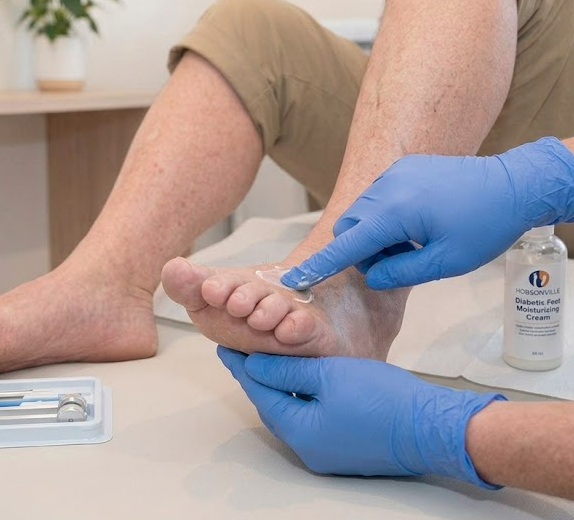
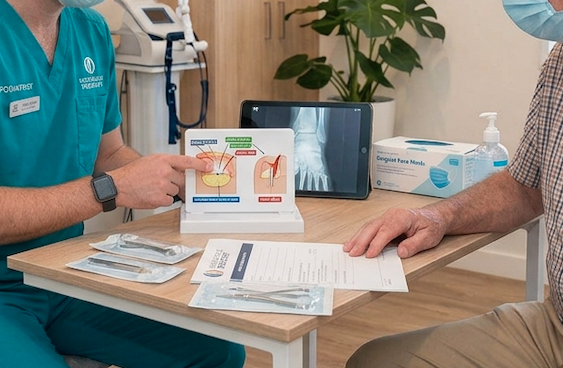
Conservative care. For mild cases, we can often relieve the ingrown nail edge, clean the area, and provide dressings and footwear advice to let it heal without surgery.
Partial nail avulsion. For recurring or more painful ingrown toenails, we remove the offending section of the nail under local anaesthetic. This is a routine in-clinic procedure with minimal downtime.
Phenolisation (permanent correction). Where a toenail keeps ingrowing on the same side, we can chemically treat the nail root (matrix) so that section of nail doesn't regrow. This has a high success rate and prevents the problem returning on that edge.
Infection management. If a toenail is infected, we'll treat the infection directly and, if needed, coordinate care with your GP for antibiotics.
We'll always explain the options available for your specific case and recommend the least invasive treatment that will actually solve the problem — not just settle it for a few weeks.
Ongoing Nail Maintenance
Many ingrown toenails are preventable with the right routine. We offer regular nail care appointments for anyone who struggles to manage their own nails safely, including:
- Clients with thickened, fungal, or difficult-to-cut nails
- Diabetics and others for whom home nail care carries higher risk
- Older adults with reduced mobility or eyesight
- Anyone who has had a previous ingrown toenail and wants to avoid a repeat
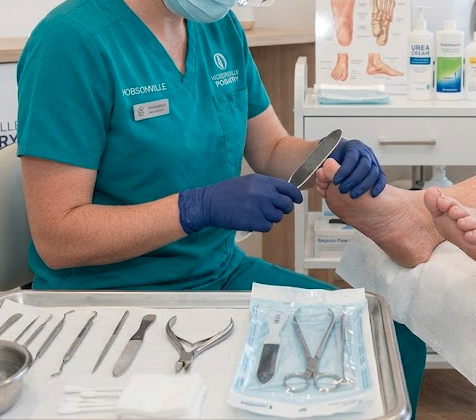
At a nail maintenance appointment, we trim and file nails to the correct shape and length, reduce thickened nail plates, and check for early signs of fungal infection or skin issues around the toes.
Other services



Clinic Hours
Get in touch today
Contact details
Address
Hobsonville Auckland
0618
We are located in the Hobson Centre, upstairs next to the Hobsonville Family Doctors, in the Hobsonville Physiotherapy space.